Welcome!
I’m Lawrence Ogbeifun, an Assistant Professor of Economics at Hartwick College. My research is in empirical macroeconomics, with a focus on monetary economics and applied time series analysis. My broader work also spans labor and environmental economics, including labor market dynamics in general equilibrium settings. Across these areas, I aim to answer questions that are both academically interesting and policy-relevant. Feel free to explore my research, publications, and teaching — and reach out if you’d like to connect.
Feel free to contact me directly
PhD in Economics, 2023
University of Mississippi
MA in Economics, 2019
University of Mississippi
MSc in Economics, 2016
University of Lagos, Nigeria
BSc in Economics, 2012
University of Benin, Nigeria
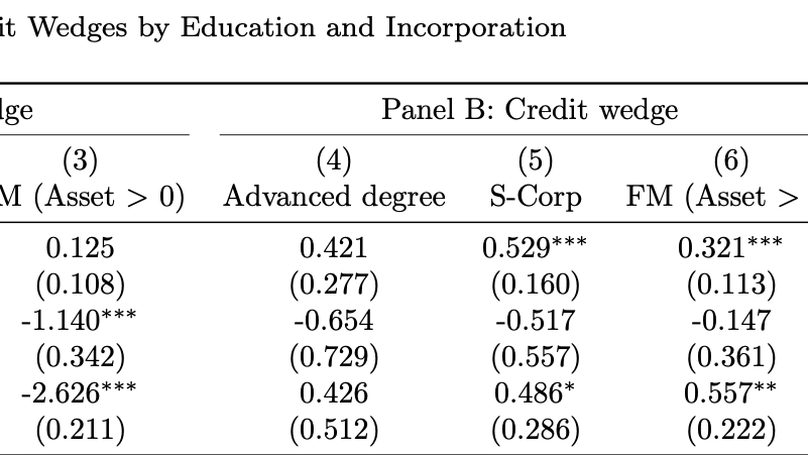
Do minority- and women-owned firms lag because of weaker product-market conditions or restricted credit access — and does this differ at the intersection of race and gender? Using the restricted-access Kauffman Firm Survey, we decompose the average revenue product of capital into a markup wedge and a credit wedge. Product-market disadvantages turn out to be at least as important as credit frictions for most groups, and pooled race-only or gender-only comparisons hide this heterogeneity.

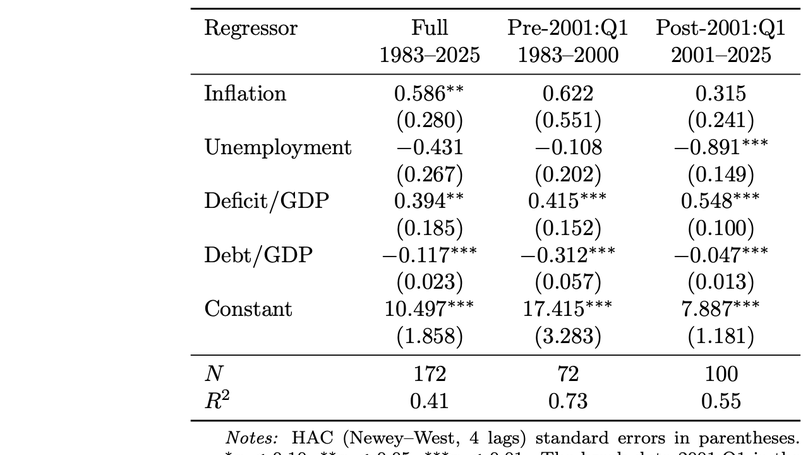
Does the way the U.S. finances deficits — money versus bonds — matter, and have the policy rules changed? Using a structural VAR on quarterly data from 1983 to 2025, I find bond-financed shocks crowd out activity while the money-financed inflation channel is weaker than popular accounts suggest. The policy reaction functions are unstable, and deficit financing explains only a modest share of the 2021–2023 inflation.

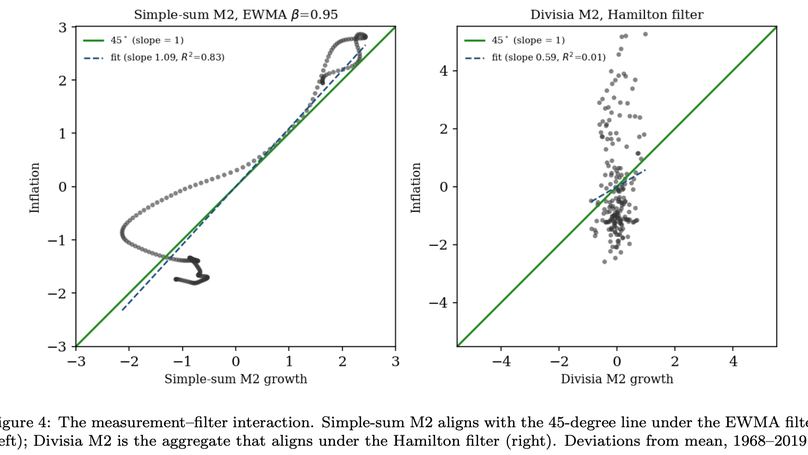
Do the long-run predictions of the quantity theory of money still hold on modern data when money is better measured and trends better filtered? Using Divisia aggregates and the Hamilton filter over 1968–2019, I find the one-for-one money–inflation link holds for Divisia M2 and MZM, but is conditional rather than universal. Extending through 2024, broad money growth led the 2021–2023 inflation surge, confirming the pattern out of sample.

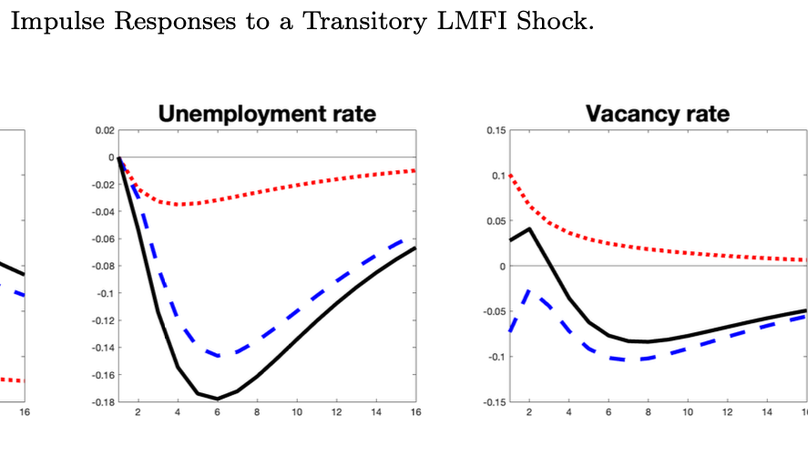
How does labor market reform shape business cycle dynamics? I build a real business cycle model in which reform works through two channels — better job-matching efficiency and lower vacancy-posting costs — and use shocks to a U.S. labor market freedom index to test their relevance. Both the structural model and VAR evidence point to the vacancy-cost channel producing a net positive effect on vacancies.