Selected-Env

Core Pathway to Net Zero: Dissecting the Non‐Linear Dynamics Between Clean Energy Investments and Carbon Budget
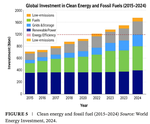
Motivation: The climate crisis stands as the defining moral and intellectual dilemma of our age. Misguided clean-energy investments expose the fragility of the energy–carbon equilibrium, demanding analysis, ethical foresight, and institutional resolve to preserve our ecological inheritance. Purpose: This study examines the dynamic impact of energy investment on the carbon budget across 28 developed and 37 developing countries, using assembled annual data from 2000 to 2024. Design/methodology/approach: The empirical strategy is framed in time series and dynamic econometric analysis. Findings: The results indicate a concave relationship between clean-energy investment and carbon budgets, where a 1% increase in clean-energy investment lowers carbon budgets by approximately 2.6% in developing economies and 2.1% in developed economies, with diminishing marginal returns. Nonlinear effects and strong persistence in historical carbon trajectories jointly shape the current effectiveness of investments across both groups. Research limitations/implications: The study focuses on developed and developing economies, which limits the detail on individual countries but enhances cross-regional understanding. Originality/value: The study makes a significant contribution to the existing literature by demonstrating that clean-energy investment yields larger marginal carbon reductions in developing economies, implying higher global mitigation efficiency.
Crafting impact of crime on carbon intensity: An asymmetric analysis
This paper investigates an often neglected determinant of environmental degradation: the role of criminal activity in shaping the carbon intensity. While existing research predominantly attributes emissions to energy use, industrial structure, and economic expansion, the influence of crime on carbon outcomes has received limited empirical attention. We address this gap by theorizing and estimating the channels through which crime disrupts regulatory effectiveness, weakens institutional capacity, and induces environmentally harmful behaviors. The study makes three contributions. First, it identifies the direct effect of crime on carbon intensity within a coherent theoretical framework. Secondly, it develops a refined empirical model that isolates the mechanisms linking crime, institutional responses, and emissions. Thirdly, it implements an integrated approach combining time-series methods with dynamic panel estimators across twenty-four OECD countries from 2005 to 2020. The results show that crime significantly increases carbon intensity, whereas economic growth, trade openness, and strengthened law-enforcement capacity contribute to its reduction. Social factors, including education, public health, and living standards, further mitigate emissions. Interaction effects reveal that crime exacerbates the environmental consequences of economic expansion, although enhanced law-enforcement efforts moderate this impact. Overall, the findings underscore the importance of institutional quality in advancing effective environmental policy and promoting long-term ecological resilience.
Extricating the impacts of emissions trading system and energy transition on carbon intensity
Emissions trading systems (ETS) are market-driven mechanisms designed to reduce greenhouse gas emissions (GHGs) by levying the cost of carbon. Although ETS has been implemented effectively in certain regions, concerns about its efficacy in Organisation for Economic Co-operation and Development (OECD) countries persist, as it may be hindered by a combination of factors, such as exorbitant costs, inadequate coverage, political reluctance, policy disruptions, and a lack of clear understanding of the underlying mechanism through which it affects carbon intensity. In this study, we analyse the effects of the ETS and energy transition on carbon intensity for a panel of 24 OECD countries during 2000-2019 using advanced dynamic econometrics. Our empirical approach involves three primary specifications. Utilizing standard panel methods, which are innovative in controlling unobserved heterogeneity. We then explored the long-and short-run relationships using the generalised method of moments (GMM) dynamic family, and applying the quantiles via moments model to re-evaluate the heterogeneity drivers of carbon neutrality. We also use an alternative and complementary statistical procedure by Hausman–Taylor and the feasible generalised least squares (FGLS) model as robustness checks. Our findings indicate that implementing an ETS and investing in renewable energy can significantly reduce carbon emissions. However, economic growth and carbon taxes increase carbon emissions. These findings emphasize the importance of adopting a comprehensive strategy towards an effective emission trading system and expansion of renewable energy in reducing carbon emissions. Moreover, prioritizing current and past emissions is necessary for a quick transition to a low-carbon economy in OECD countries.